Pantree: The Evolution of Shopping
Section 01: The Brief & The Discovery
The Problem: Waste Begins Before Purchase
1.3
Billion
Tonnes
Wasted Annually
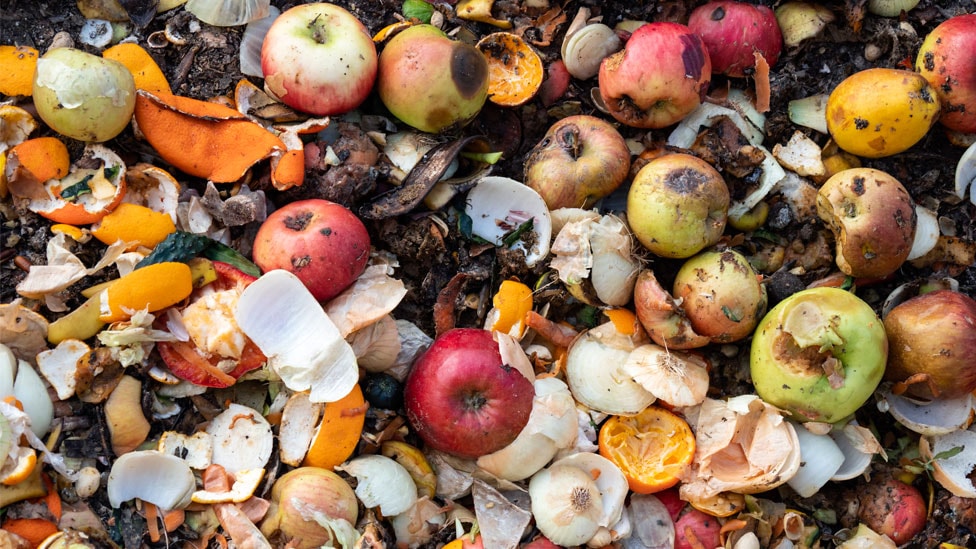
Household food waste is largely driven by planning failures, emotional overbuying, and poor storage habits, not malicious intent. During early desk research, a strong social capital dynamic emerged: families with fuller fridges are perceived to be wealthier, which unintentionally incentives systemic over-purchasing. This reinforced a core hypothesis effective intervention must happen in the supermarket aisle before the purchase, not after the food is already decaying in a fridge.
The Solution: A Predictive Shopping Ecosystem
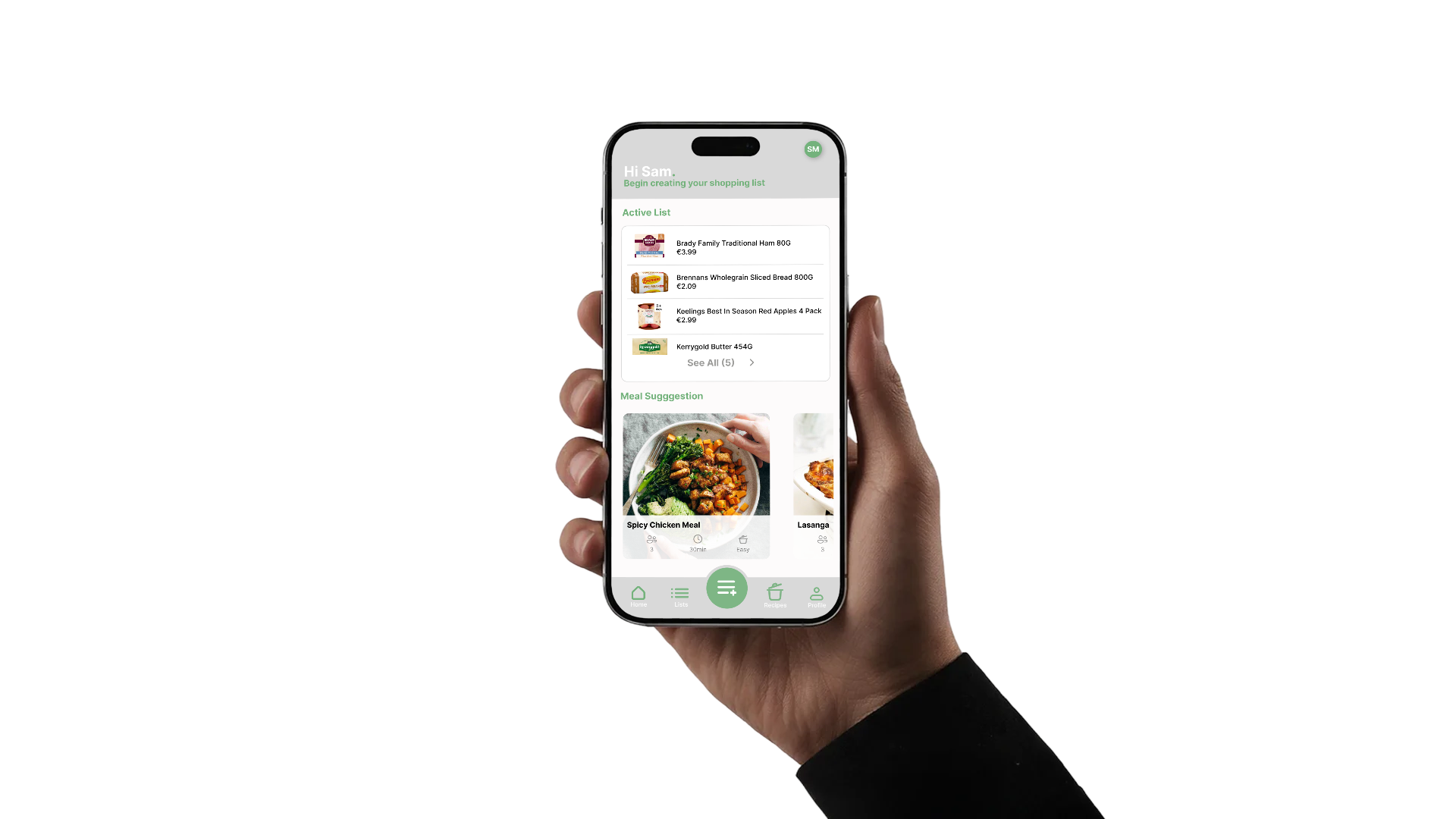
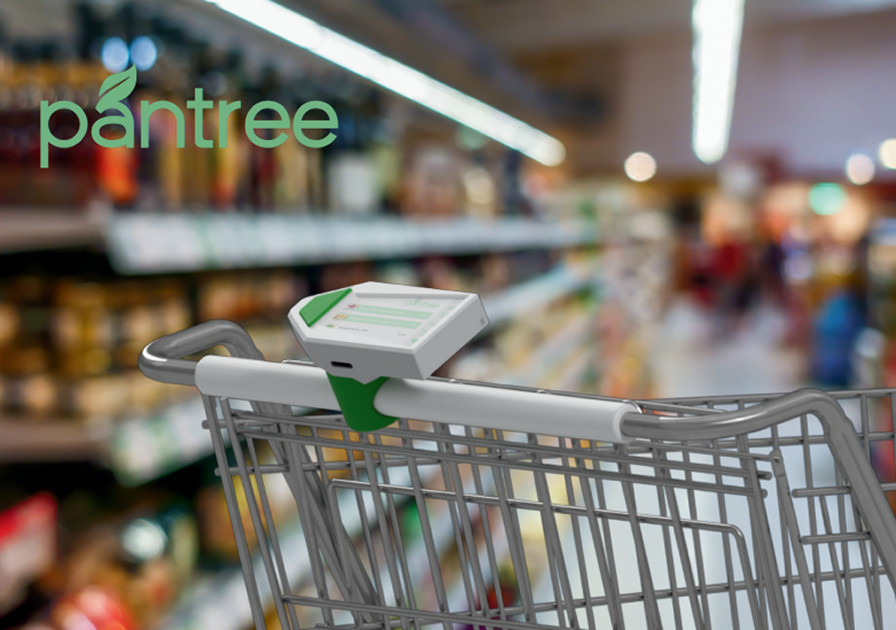
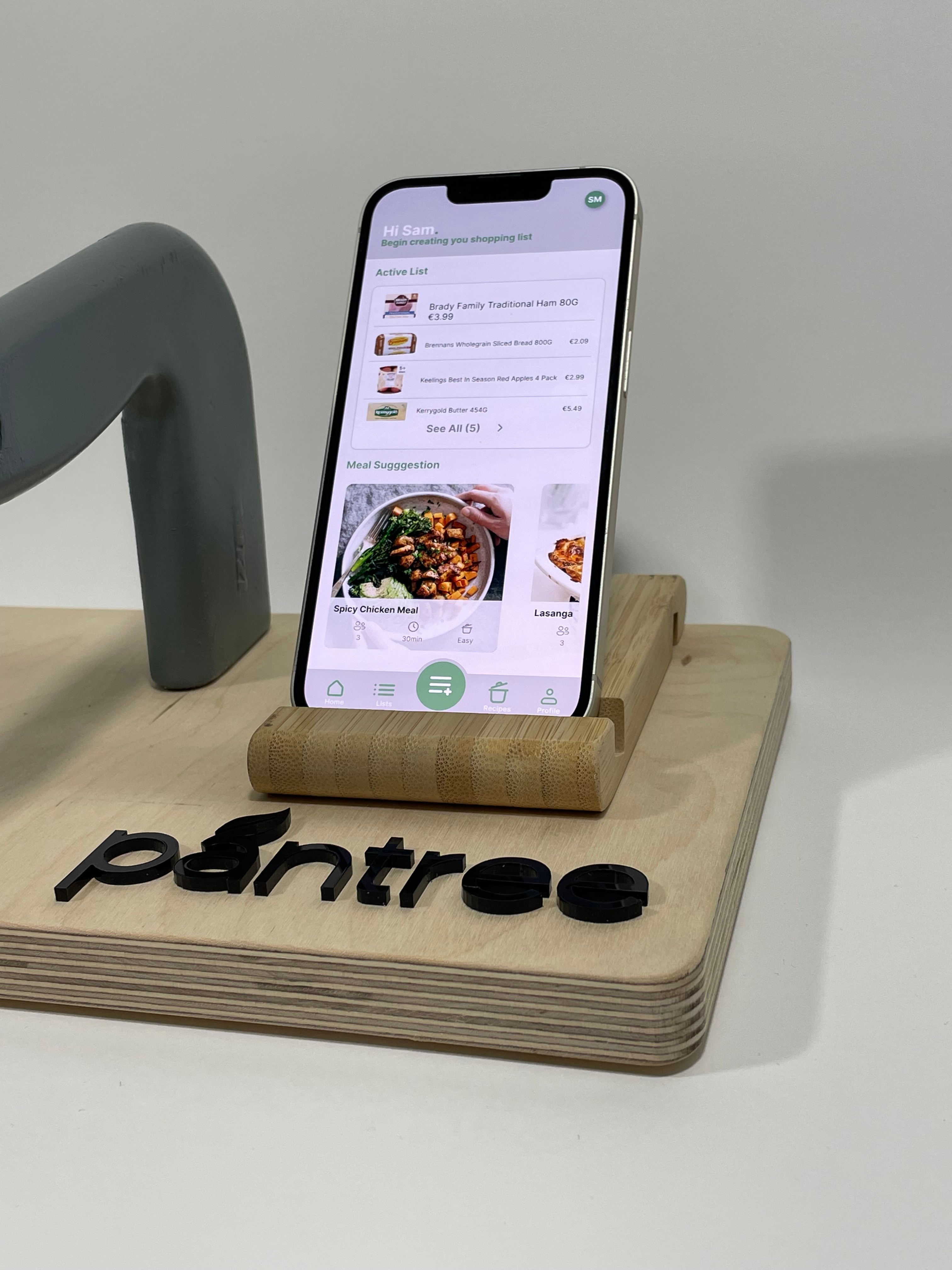
Pantree is a smart onboard trolley system and digital companion built for the conscious shopper. By connecting directly with a retailer’s existing application, it displays live, context-aware shopping lists on a physical trolley dock. The system utilises predictive intelligence via an A.R.I.M.A (Auto-Regressive Integrated Moving Average) model to reason with users, challenge their purchasing habits based on household profiles, and suggest what is actually needed in real time.
The Mission
The goal was twofold: reduce consumer food waste through frictionless in-store planning, and establish a reciprocal B2B2C trust model where supermarkets see enhanced loyalty and consumers see tangible financial savings.
Section 02: Human-Centered Research & Validation
Validating the Intervention

1.54kg
0.63kg
0kg
0.5kg
1.0kg
1.5kg
0kg
0.5kg
1.0kg
1.5kg
To test whether structured planning actually reduces waste, I ran a two-week quantitative baseline study with 20 participants. Group 1 used strict shopping lists; Group 2 shopped unguided. The results were definitive: list users generated just 0.63kg of waste per week, while non-list users generated 1.54kg. This 59% reduction validated planning as the single highest-leverage intervention point.
Qualitative Insights & Photovoice
I conducted six semi-structured interviews and a "photovoice" study where users documented moments of food waste in their daily lives. The most striking insight was how unremarkable and normalised the waste felt.
Habits outweigh intent
Good intentions constantly broke down against busy routines.
Support beats intrusion
Users disengaged when reminders felt noisy or judgmental.
Value must be tangible
Users immediately disengaged when reminders felt noisy or judgmental.
Reframing the Product
Through assumption mapping, I realised that efficiency alone wouldn't drive adoption, and requiring users to download a standalone app would create too much friction. This pivoted Pantree from a "smart list" into an adaptive, predictive system designed to integrate directly into a retailer’s existing POS and mobile ecosystem.
Section 03: The Hybrid Build
Industrial Design: Prototyping the Hardware
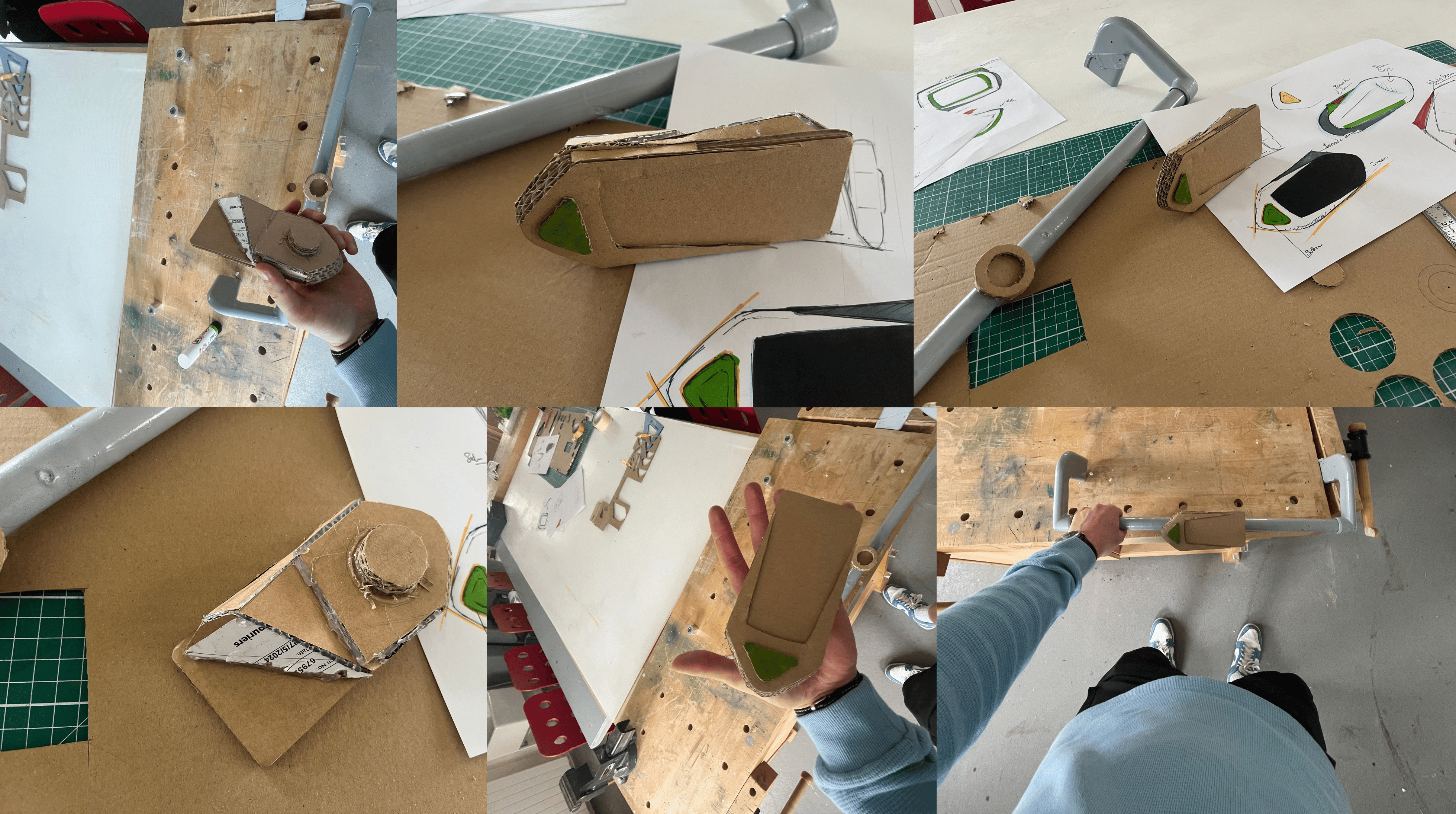
Because Pantree lives in a high-traffic, physically demanding supermarket environment, the form factor had to be durable and intuitive. I started with lo-fi cardboard prototypes to test scale, handle-attachment mechanics, and screen occlusion.
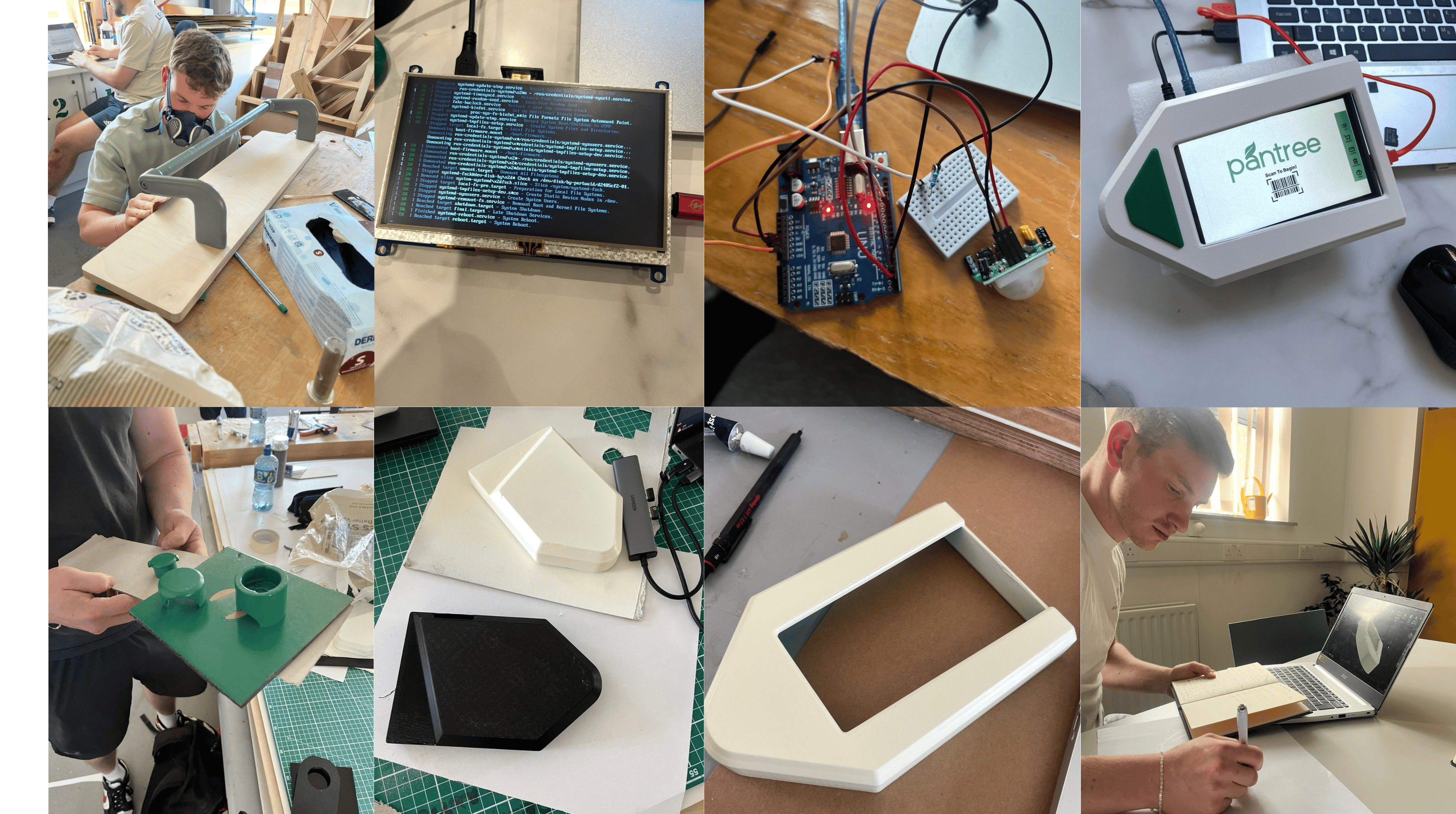
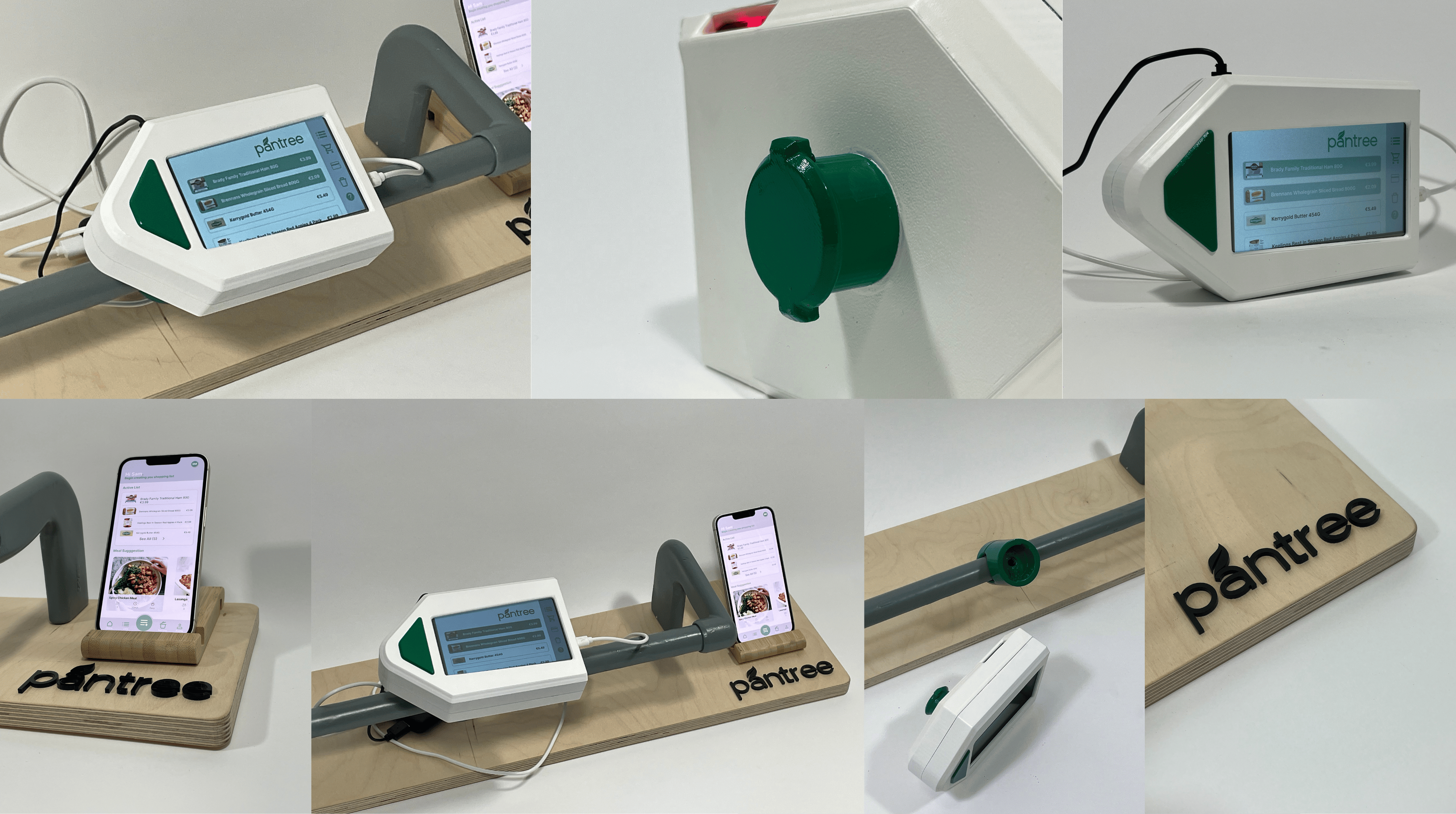
The final high-fidelity physical build was developed using CAD and 3D printing. I sanded and painted the casing to achieve a production-grade finish and integrated live electronics powered by a Raspberry Pi to simulate real barcode scanning and interface interactions in a physical store environment. Key decisions included a fixed trolley attachment point for security and an oversized, tactile primary button to accommodate varying levels of manual dexterity.
Digital Prototyping: The Interface
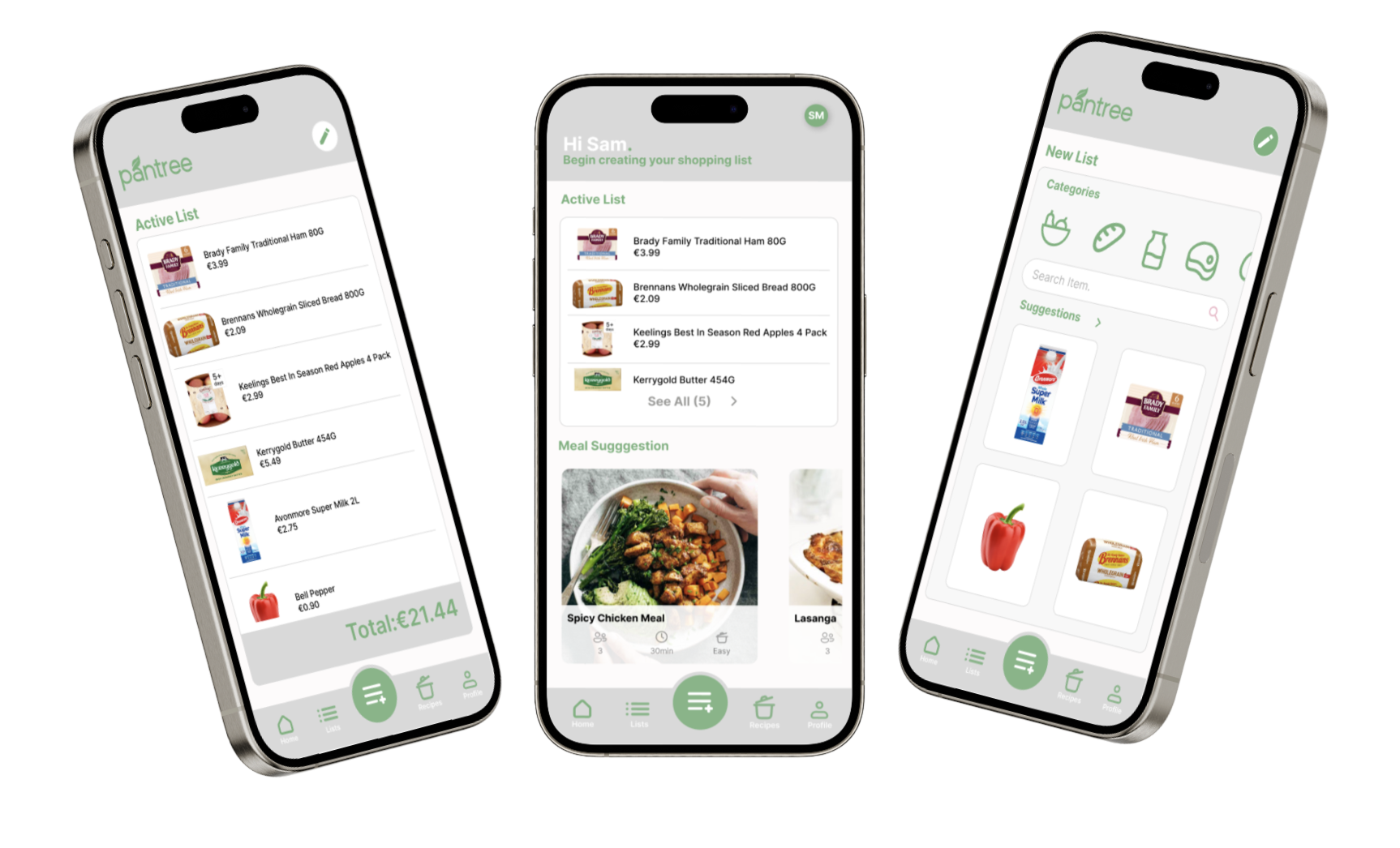
The digital UI, built in Figma, needed to be highly legible at a distance while moving down an aisle. I stripped away complex data entry in favour of Yes/No feedback loops, predictive suggestions based on the ARIMA model, and an adaptive list that automatically optimises its sorting based on the physical POS layout of the specific store.
Section 04: Outcomes & Strategic Reflections
The B2B2C Reality (Retail Buy-In)
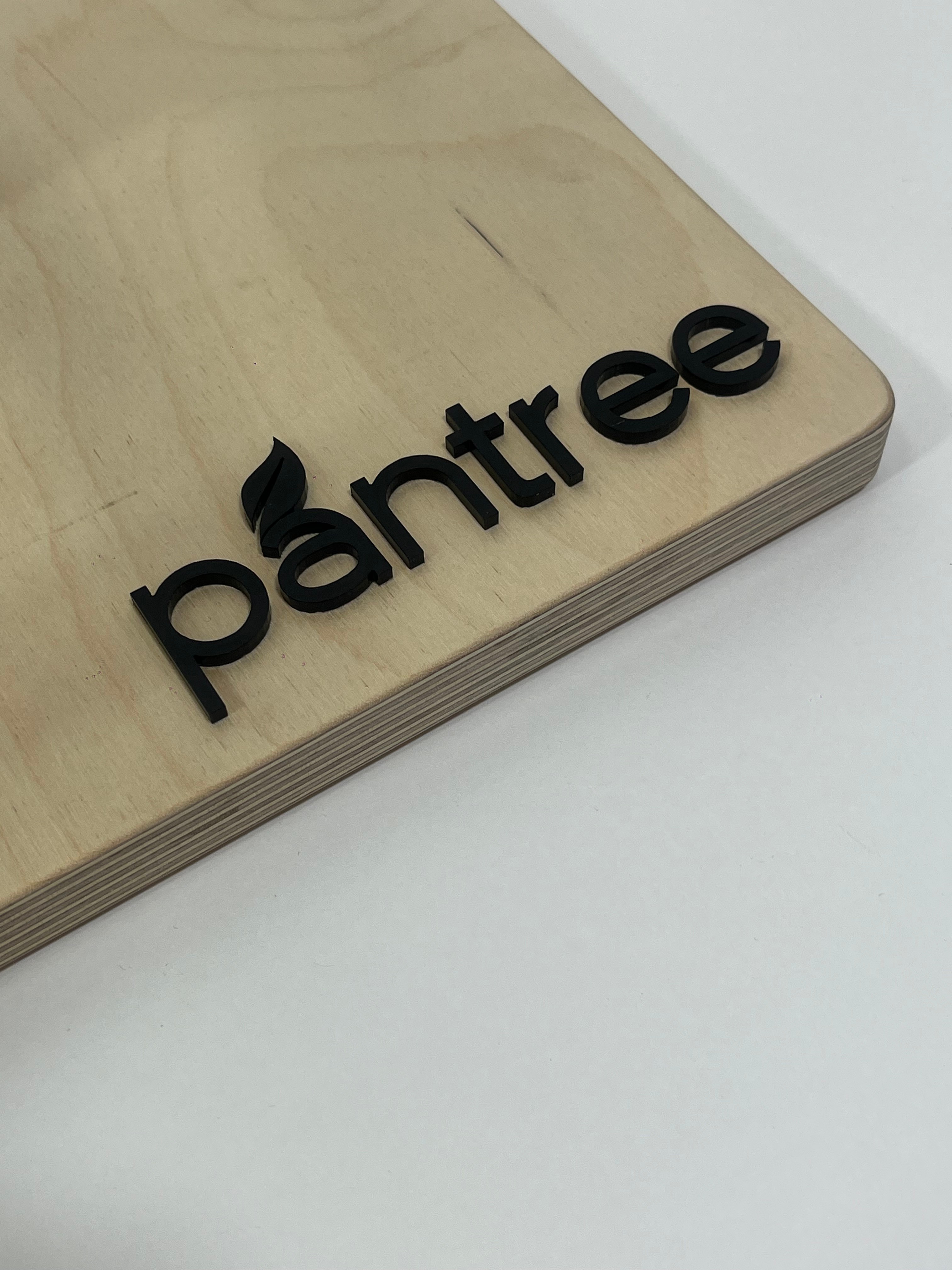
Designing a system that sits between a consumer and their groceries requires acknowledging a difficult commercial reality: retail buy-in is the ultimate barrier to entry. Pantree operates on a reciprocal value model. It helps the user optimise purchasing to save money and reduce waste, while giving the retailer unprecedented, predictive data on inventory demand before the user even arrives at the checkout.
Addressing the Impulse-Buy Concern
A frequent stakeholder challenge to predictive shopping is the fear of reduced impulse purchasing a major revenue driver for supermarkets. However, by smoothing the in-store flow and reducing the cognitive load of routine items, the system preserves enough mental bandwidth and physical cart space for intentional, high-margin impulse buys, covering the retailer's bottom line.
Final Thoughts
Building Pantree required balancing physical industrial design with complex digital workflows and predictive algorithms. It proved that the most effective way to change deeply ingrained consumer behaviour isn't through guilt or friction, but by seamlessly upgrading the tools they already use.
Further work
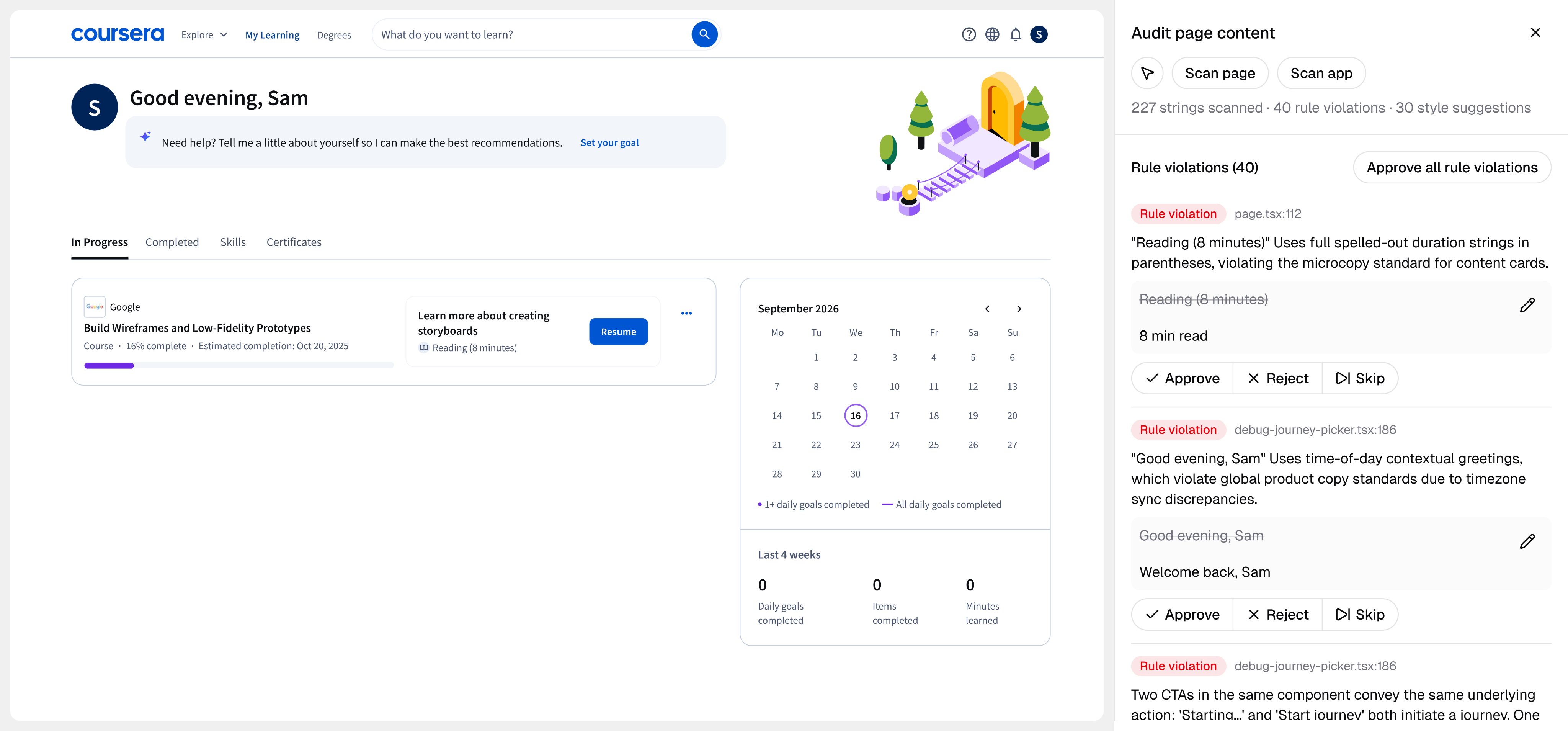
Content Design in an Agentic Workflow

Pantree: The Evolution of Shopping
Section 01: The Brief & The Discovery
The Problem: Waste Begins Before Purchase
01
1.3
Billion
Tonnes
Wasted Annually
Household food waste is largely driven by planning failures, emotional overbuying, and poor storage habits, not malicious intent. During early desk research, a strong social capital dynamic emerged: families with fuller fridges are perceived to be wealthier, which unintentionally incentives systemic over-purchasing. This reinforced a core hypothesis effective intervention must happen in the supermarket aisle before the purchase, not after the food is already decaying in a fridge.
The Solution: A Predictive Shopping Ecosystem
02
Pantree is a smart onboard trolley system and digital companion built for the conscious shopper. By connecting directly with a retailer’s existing application, it displays live, context-aware shopping lists on a physical trolley dock. The system utilises predictive intelligence via an A.R.I.M.A (Auto-Regressive Integrated Moving Average) model to reason with users, challenge their purchasing habits based on household profiles, and suggest what is actually needed in real time.
The Mission
The goal was twofold: reduce consumer food waste through frictionless in-store planning, and establish a reciprocal B2B2C trust model where supermarkets see enhanced loyalty and consumers see tangible financial savings.
Section 02: Human-Centered Research & Validation
Validating the Intervention
01

1.54kg
0.63kg
0kg
0.5kg
1.0kg
1.5kg
0kg
0.5kg
1.0kg
1.5kg
To test whether structured planning actually reduces waste, I ran a two-week quantitative baseline study with 20 participants. Group 1 used strict shopping lists; Group 2 shopped unguided. The results were definitive: list users generated just 0.63kg of waste per week, while non-list users generated 1.54kg. This 59% reduction validated planning as the single highest-leverage intervention point.
Qualitative Insights & Photovoice
I conducted six semi-structured interviews and a "photovoice" study where users documented moments of food waste in their daily lives. The most striking insight was how unremarkable and normalised the waste felt.
Habits outweigh intent
Good intentions constantly broke down against busy routines.
Support beats intrusion
Users disengaged when reminders felt noisy or judgmental.
Value must be tangible
Users immediately disengaged when reminders felt noisy or judgmental.
Reframing the Product
Through assumption mapping, I realised that efficiency alone wouldn't drive adoption, and requiring users to download a standalone app would create too much friction. This pivoted Pantree from a "smart list" into an adaptive, predictive system designed to integrate directly into a retailer’s existing POS and mobile ecosystem.
Section 03: The Hybrid Build
Industrial Design: Prototyping the Hardware
01
Because Pantree lives in a high-traffic, physically demanding supermarket environment, the form factor had to be durable and intuitive. I started with lo-fi cardboard prototypes to test scale, handle-attachment mechanics, and screen occlusion.
02
The final high-fidelity physical build was developed using CAD and 3D printing. I sanded and painted the casing to achieve a production-grade finish and integrated live electronics powered by a Raspberry Pi to simulate real barcode scanning and interface interactions in a physical store environment. Key decisions included a fixed trolley attachment point for security and an oversized, tactile primary button to accommodate varying levels of manual dexterity.
Digital Prototyping: The Interface
03
The digital UI, built in Figma, needed to be highly legible at a distance while moving down an aisle. I stripped away complex data entry in favour of Yes/No feedback loops, predictive suggestions based on the ARIMA model, and an adaptive list that automatically optimises its sorting based on the physical POS layout of the specific store.
Section 04: Outcomes & Strategic Reflections
The B2B2C Reality (Retail Buy-In)
01
Designing a system that sits between a consumer and their groceries requires acknowledging a difficult commercial reality: retail buy-in is the ultimate barrier to entry. Pantree operates on a reciprocal value model. It helps the user optimise purchasing to save money and reduce waste, while giving the retailer unprecedented, predictive data on inventory demand before the user even arrives at the checkout.
Addressing the Impulse-Buy Concern
A frequent stakeholder challenge to predictive shopping is the fear of reduced impulse purchasing a major revenue driver for supermarkets. However, by smoothing the in-store flow and reducing the cognitive load of routine items, the system preserves enough mental bandwidth and physical cart space for intentional, high-margin impulse buys, covering the retailer's bottom line.
Final Thoughts
Building Pantree required balancing physical industrial design with complex digital workflows and predictive algorithms. It proved that the most effective way to change deeply ingrained consumer behaviour isn't through guilt or friction, but by seamlessly upgrading the tools they already use.
Further work
Content Design in an Agentic Workflow
Pantree: The Evolution of Shopping
Section 01: The Brief & The Discovery
The Problem: Waste Begins Before Purchase
Household food waste is largely driven by planning failures, emotional overbuying, and poor storage habits, not malicious intent. During early desk research, a strong social capital dynamic emerged: families with fuller fridges are perceived to be wealthier, which unintentionally incentives systemic over-purchasing. This reinforced a core hypothesis effective intervention must happen in the supermarket aisle before the purchase, not after the food is already decaying in a fridge.
The Solution: A Predictive Shopping Ecosystem
Pantree is a smart onboard trolley system and digital companion built for the conscious shopper. By connecting directly with a retailer’s existing application, it displays live, context-aware shopping lists on a physical trolley dock. The system utilises predictive intelligence via an A.R.I.M.A (Auto-Regressive Integrated Moving Average) model to reason with users, challenge their purchasing habits based on household profiles, and suggest what is actually needed in real time.
The Mission
The goal was twofold: reduce consumer food waste through frictionless in-store planning, and establish a reciprocal B2B2C trust model where supermarkets see enhanced loyalty and consumers see tangible financial savings.
1.3
Billion
Tonnes
Wasted Annually
Section 02: Human-Centered Research & Validation
Validating the Intervention
To test whether structured planning actually reduces waste, I ran a two-week quantitative baseline study with 20 participants. Group 1 used strict shopping lists; Group 2 shopped unguided. The results were definitive: list users generated just 0.63kg of waste per week, while non-list users generated 1.54kg. This 59% reduction validated planning as the single highest-leverage intervention point.
Qualitative Insights & Photovoice
I conducted six semi-structured interviews and a "photovoice" study where users documented moments of food waste in their daily lives. The most striking insight was how unremarkable and normalised the waste felt.
Habits outweigh intent
Good intentions constantly broke down against busy routines.
Support beats intrusion
Users disengaged when reminders felt noisy or judgmental.
Value must be tangible
Users immediately disengaged when reminders felt noisy or judgmental.
Reframing the Product
Through assumption mapping, I realised that efficiency alone wouldn't drive adoption, and requiring users to download a standalone app would create too much friction. This pivoted Pantree from a "smart list" into an adaptive, predictive system designed to integrate directly into a retailer’s existing POS and mobile ecosystem.
1.54kg
0.63kg
0kg
0.5kg
1.0kg
1.5kg
0kg
0.5kg
1.0kg
1.5kg
Shopping List Experiment
Weekly Waste Output
Integration with existing retailer apps is critical.
Section 03: The Hybrid Build
Industrial Design: Prototyping the Hardware
Because Pantree lives in a high-traffic, physically demanding supermarket environment, the form factor had to be durable and intuitive. I started with lo-fi cardboard prototypes to test scale, handle-attachment mechanics, and screen occlusion.
The final high-fidelity physical build was developed using CAD and 3D printing. I sanded and painted the casing to achieve a production-grade finish and integrated live electronics powered by a Raspberry Pi to simulate real barcode scanning and interface interactions in a physical store environment. Key decisions included a fixed trolley attachment point for security and an oversized, tactile primary button to accommodate varying levels of manual dexterity.
Digital Prototyping: The Interface
The digital UI, built in Figma, needed to be highly legible at a distance while moving down an aisle. I stripped away complex data entry in favour of Yes/No feedback loops, predictive suggestions based on the ARIMA model, and an adaptive list that automatically optimizes its sorting based on the physical POS layout of the specific store.
Section 04: Outcomes & Strategic Reflections
The B2B2C Reality (Retail Buy-In)
Designing a system that sits between a consumer and their groceries requires acknowledging a difficult commercial reality: retail buy-in is the ultimate barrier to entry. Pantree operates on a reciprocal value model. It helps the user optimise purchasing to save money and reduce waste, while giving the retailer unprecedented, predictive data on inventory demand before the user even arrives at the checkout.
Addressing the Impulse-Buy Concern
A frequent stakeholder challenge to predictive shopping is the fear of reduced impulse purchasing a major revenue driver for supermarkets. However, by smoothing the in-store flow and reducing the cognitive load of routine items, the system preserves enough mental bandwidth and physical cart space for intentional, high-margin impulse buys, covering the retailer's bottom line.
Final Thoughts
Building Pantree required balancing physical industrial design with complex digital workflows and predictive algorithms. It proved that the most effective way to change deeply ingrained consumer behaviour isn't through guilt or friction, but by seamlessly upgrading the tools they already use.
Further work
Content Design in an Agentic Workflow